Marketing for architects
Marketing for architects starts with the website. How to get clients: a strong portfolio, project pages, service pages, and content only you can write.
By SoyabotOctober 19, 20267 min read

In this article
- How to get clients for an architecture firm?
- Start with the portfolio
- Build pages for the work you want to win
- Publish things only your firm can
- Make the site fast and easy to use
- Do the search basics
- What clients want to see before they call
- Be easy to find locally and regionally
- Use your network online
- Mistakes to avoid
- A simple starting plan
- Keep the website for the long term
- Where to start
Architecture firms usually win work through relationships, and that is not going to change. But before anyone hires a firm they have heard of, they look at its website. A good website does three things for an architecture firm: it proves the work, it explains the services, and it gets found by people who are not yet in your network.
This is a practical look at how architects get clients, and why the website is the base everything else rests on. I will use Ossa Studio's website as an example, with one disclosure: I have led web and brand for Ossa Studio for years, so I know that site from the inside.
How to get clients for an architecture firm?
The most reliable way is to combine relationships with a website that backs them up.
- Relationships bring the first conversation. Past clients, referrals from contractors, brokers, and other consultants, and local connections are where most introductions start.
- The website decides whether the conversation continues. When someone is recommended to a client, the first thing that client does is look you up. If your site is thin, slow, or out of date, the introduction loses momentum.
- Search brings clients who do not know you yet. People who search for a specific kind of architect, in a specific place, for a specific type of building, are close to hiring.
So the site is not a brochure. It is the one asset that works for the firm all day, for people at every stage of deciding.
Start with the portfolio
Your portfolio is your strongest argument. A few rules make it work harder:
- Show the work you want more of. A portfolio is not a complete archive. It is a selection that tells clients what you are good at.
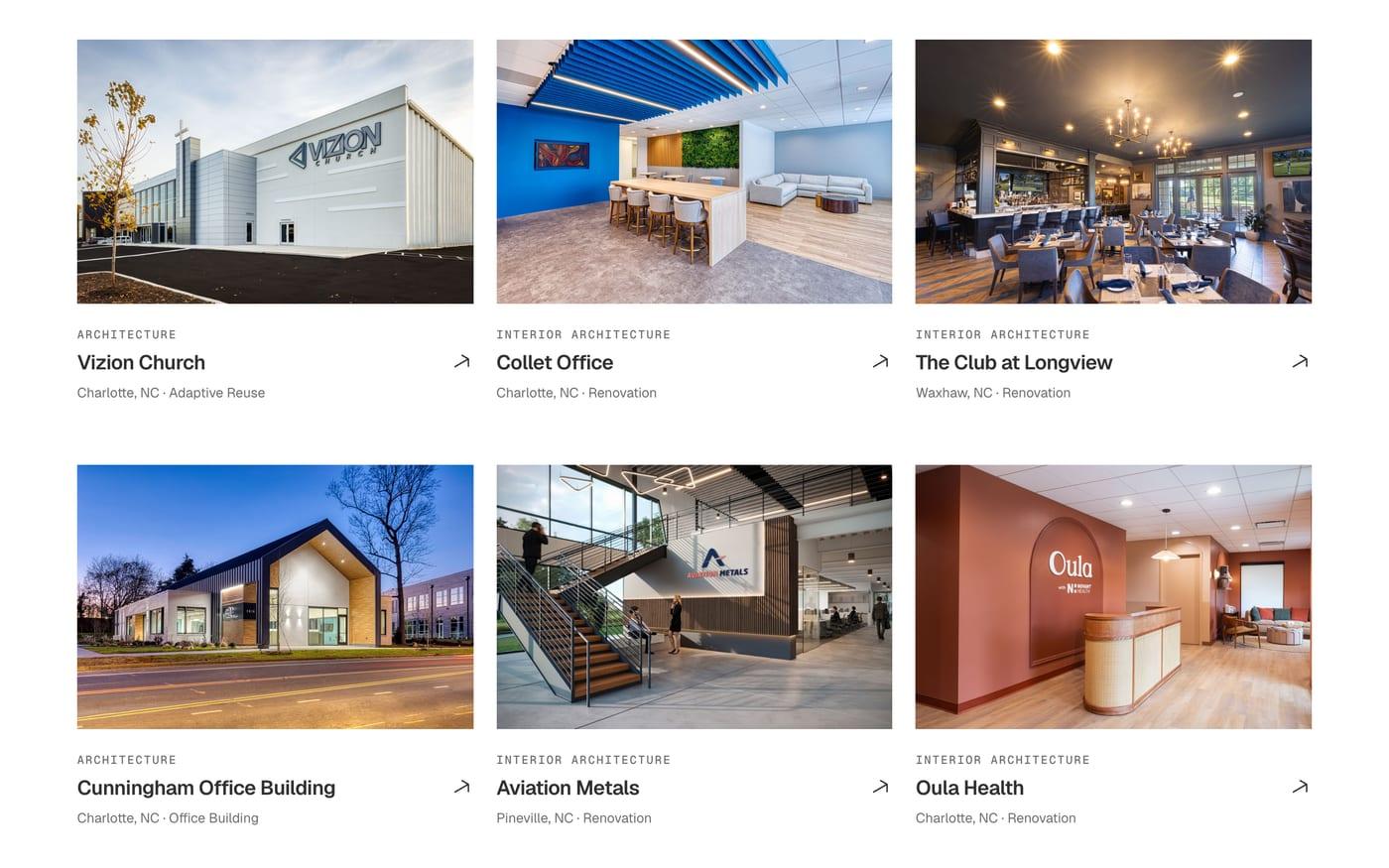
- Give every project its own page. A project page can show more photographs, describe the brief, and explain what the firm did. It also gives search engines something specific to index.
- Use strong photography, and make sure large images are optimized so the site stays fast.
- Describe the project in plain words: the type of building, the location, and the problem the design solved.
Ossa Studio's site follows this pattern: the portfolio has a page for each project, and the projects are grouped by the kinds of work the firm does.
Build pages for the work you want to win
Many people find an architect by searching for a type of project, not a firm name. Pages for specific services and sectors let you show up for those searches. Ossa Studio, for example, has dedicated pages for church architecture, change of use, and commercial interior design alongside its main services.
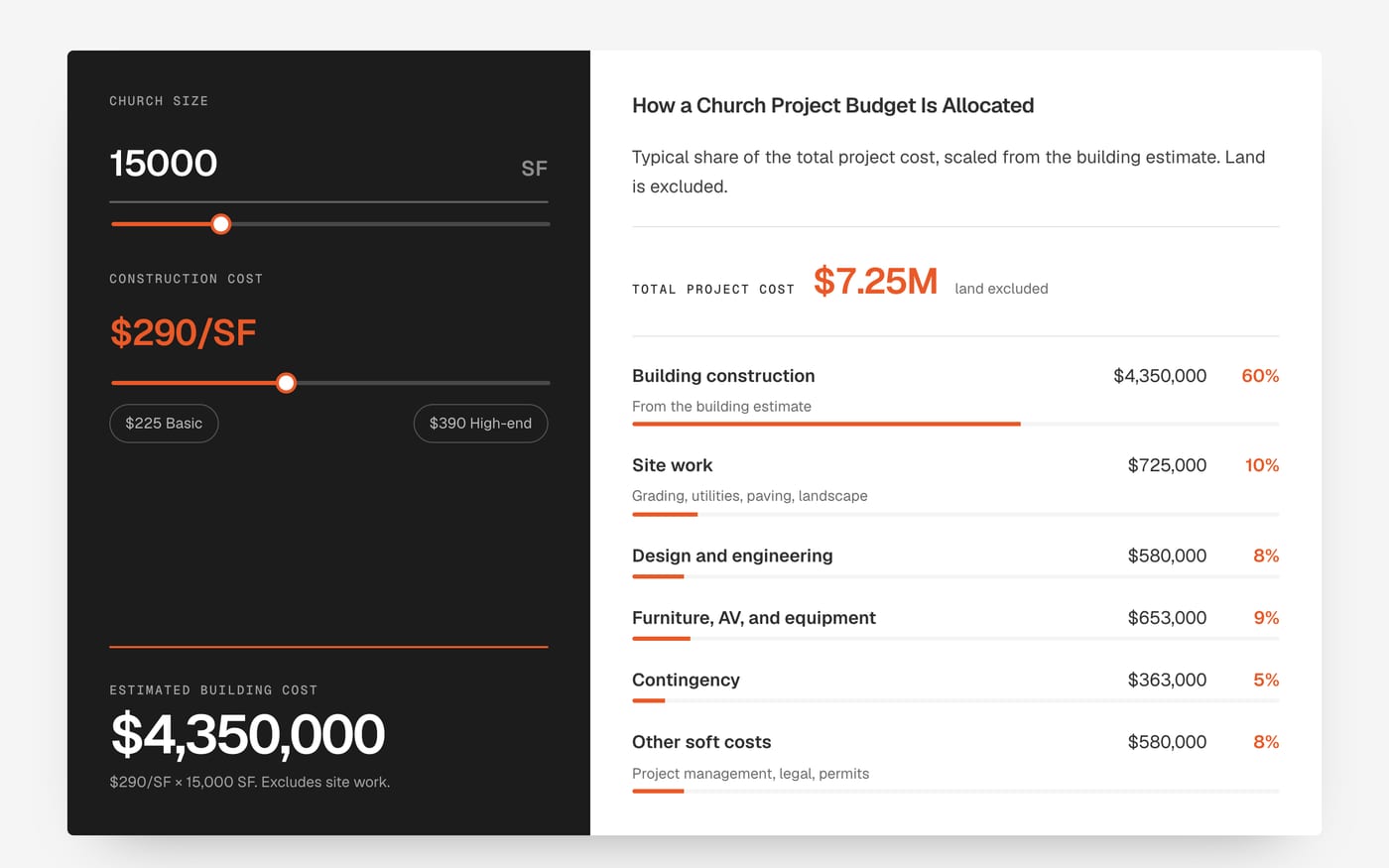
For your own firm, ask what clients call the work you want. Then give each important service or sector its own page that explains how you approach it and links to relevant projects.
Publish things only your firm can
Original content shows expertise, and it gives people reasons to come back. A podcast, a blog, or short notes on completed projects all work. Ossa Studio publishes The Power of Design Podcast, and the site gives it its own section with a page for each episode.
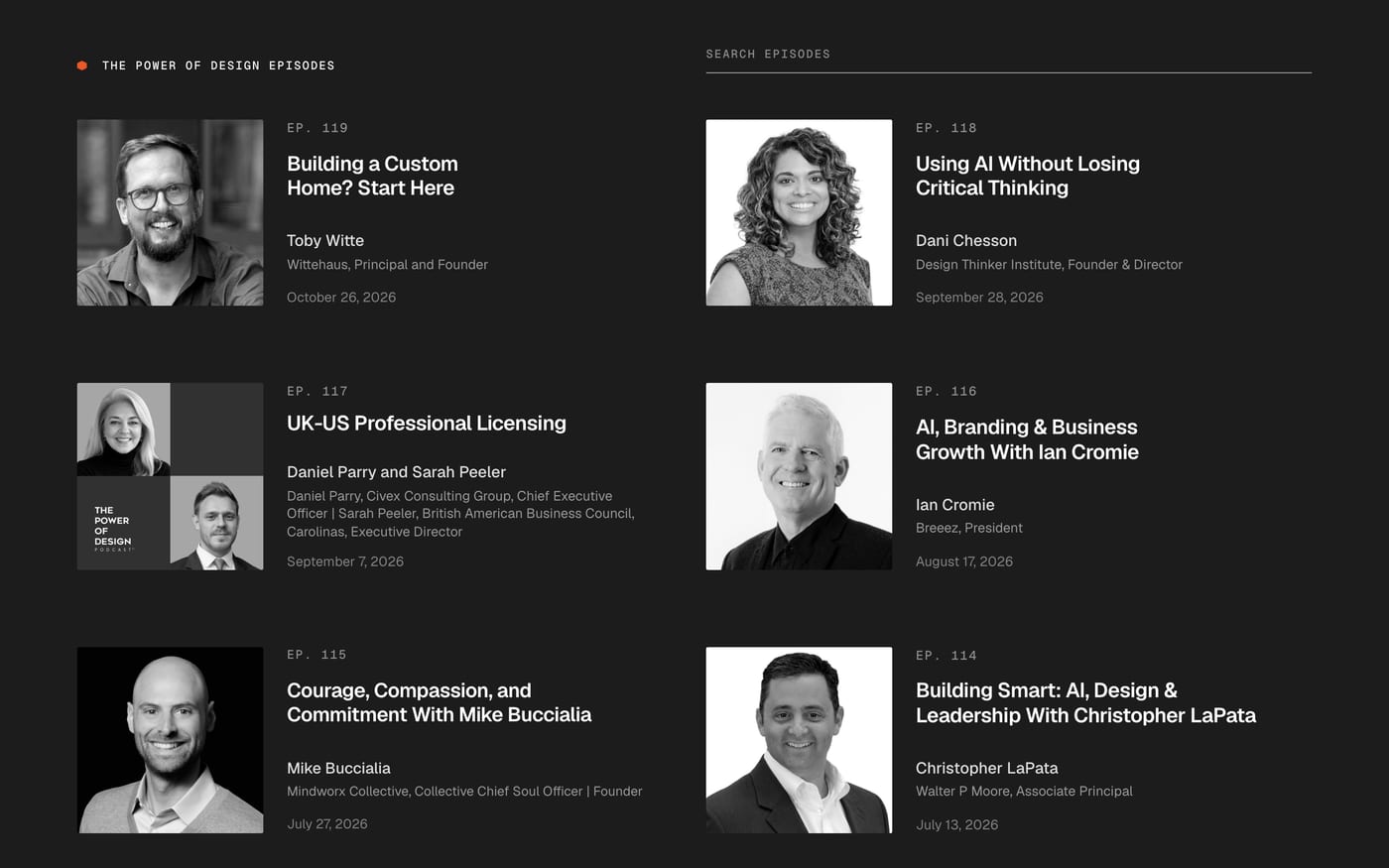
You do not need a podcast. You need a repeatable way to show how the firm thinks, and the willingness to keep doing it.
Make the site fast and easy to use
Architecture sites are image-heavy, which is the exact situation where speed problems appear. A beautiful site that takes several seconds to load on a phone loses people before they see the work.
- Use correctly sized, optimized images.
- Make sure the site works well on phones.
- Keep navigation simple: portfolio, services, about, contact.
- Put a clear way to get in touch on every page.
Do the search basics
You do not need tricks. You need the basics done well:
- A clear title and meta description on every page.
- One main heading per page, with a clean structure under it.
- Descriptive alt text on images.
- A sitemap, and Google Search Console set up.
- Text content on pages, not only images, so search engines understand what each page is about.
A good technical base does not guarantee rankings, but it keeps the site from holding you back.
What clients want to see before they call
Someone deciding whether to contact an architecture firm is asking a few quiet questions. Your site should answer them without being asked:
- Have they done this kind of project before? Show relevant work, grouped by type.
- Are they qualified to work here? State where you are licensed and any certifications you hold.
- Who would I be working with? A page about the firm and the people behind it builds trust.
- What happens if I reach out? Make the next step clear and low-pressure.
Ossa Studio's site, for instance, states the states where the firm is licensed and its certifications, and it makes the portfolio and contact path easy to reach from the first screen.
Be easy to find locally and regionally
Architecture is a local business in many ways: clients want someone who knows their market, understands local codes, and can visit the site. Make that clear:
- Say where you work. List the cities and regions you serve on your services pages and in your contact details.
- Keep your business listings consistent. The firm's name, address, and phone number should match across your website and any directory or map listing.
- Show local work. Project pages that name the city and the type of building help people searching for that kind of work in that place.
Use your network online
The relationships that bring work offline can be strengthened online. Share completed projects on LinkedIn, credit the contractors and consultants you worked with, and link back to the project page on your site. It keeps your name in front of the people who recommend you, and it sends them to a page that makes the recommendation easy.
Mistakes to avoid
- A portfolio that is a slideshow of images with no words. Search engines and clients both need context.
- Slow, heavy pages because nobody optimized the photographs.
- A site that has not been updated in years, so the newest projects are missing.
- No clear contact path, or a contact form that is hard to find.
- Everything on one page, with no separate pages for services or sectors.
A simple starting plan
If you want a place to begin, here is an order that works for most firms:
- Review your portfolio and choose the projects that show the work you want more of.
- Make sure each of those projects has its own page, with strong photographs and a clear description.
- Add or improve a page for each service and sector that matters to you.
- Check the site on a phone, and fix anything slow or hard to use.
- Set up Google Search Console and make sure the basics are in place.
- Decide on one kind of original content you can keep up, and start.
Keep the website for the long term
A website is not finished at launch. New projects should be added, content kept fresh, and the site kept updated. A site that was last touched three years ago tells visitors the firm is not active.
Where to start
If your firm's site is slow, dated, or does not show the work well, that is the first place to invest. I design and build websites for architecture firms and other U.S. businesses, and the work behind Ossa Studio's site is described in the case study.
Need a website for your architecture firm?
Tell me about your firm and your current site. I'll reply with what I can do for you.
Keep reading
October 19, 2026 · 8 min read
Website redesign SEO checklist: Keep your rankings
Redesigning your website? Follow this SEO checklist to protect your Google rankings and traffic before, during, and after launch.
October 19, 2026 · 8 min read
Website redesign cost in 2026
What a website redesign costs depends on scope, content, design, and integrations. Here is what drives the price and how to budget for it.
October 19, 2026 · 8 min read
Static website vs. WordPress
Static website or WordPress? What each one is, how they differ in speed, security, cost and editing, and which fits a business website.