Case study · Wine brand
Website design for a wine brand: Partners and Grapes
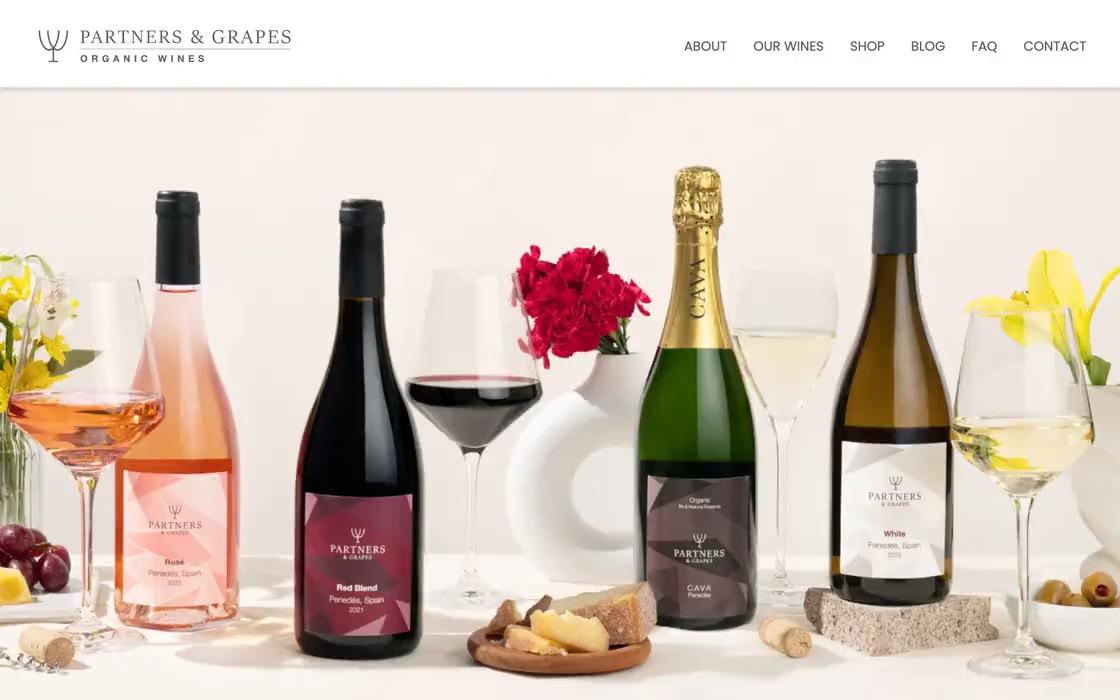
Partners and Grapes is an organic wine brand from Spain's Penedès region. I designed its logo, visual identity, wine labels, and website, so the brand and the site share one personality.
Client
- Partners and Grapes
- Organic, vegan wine brand
Location
- The Carolinas and Georgia
- Sold in 120+ stores; made in the Penedès, Spain
My role
- Brand and web design
- Logo, identity, labels, and website
01
About the brand
Partners and Grapes makes USDA Organic, vegan wines in Spain's Penedès region, with no added sugar or sulfites. The brand is woman and minority owned, and its wines sell in over 120 stores across the Carolinas and Georgia.
02
What the site had to do
A wine brand's website has three jobs: tell the story behind the bottle, present each wine, and send people to buy it. It also has to make the certifications easy to see, and give stores, distributors, and press what they need.
03
What I designed
I designed the brand and the website together: the logo, built around the idea of wine and friendship, the identity guidelines, the wine label designs, and the website, so the site and the bottle share the same personality.
- wine pagesone for each wine, with its grapes and notes
- 7
- blog postson organic wine, the brand, and its news
- 14
- questions answeredon the FAQ page
- 10
- technical sheetsready to download for stores and press
- 4
Counted on the live site on November 2, 2026.
Wines
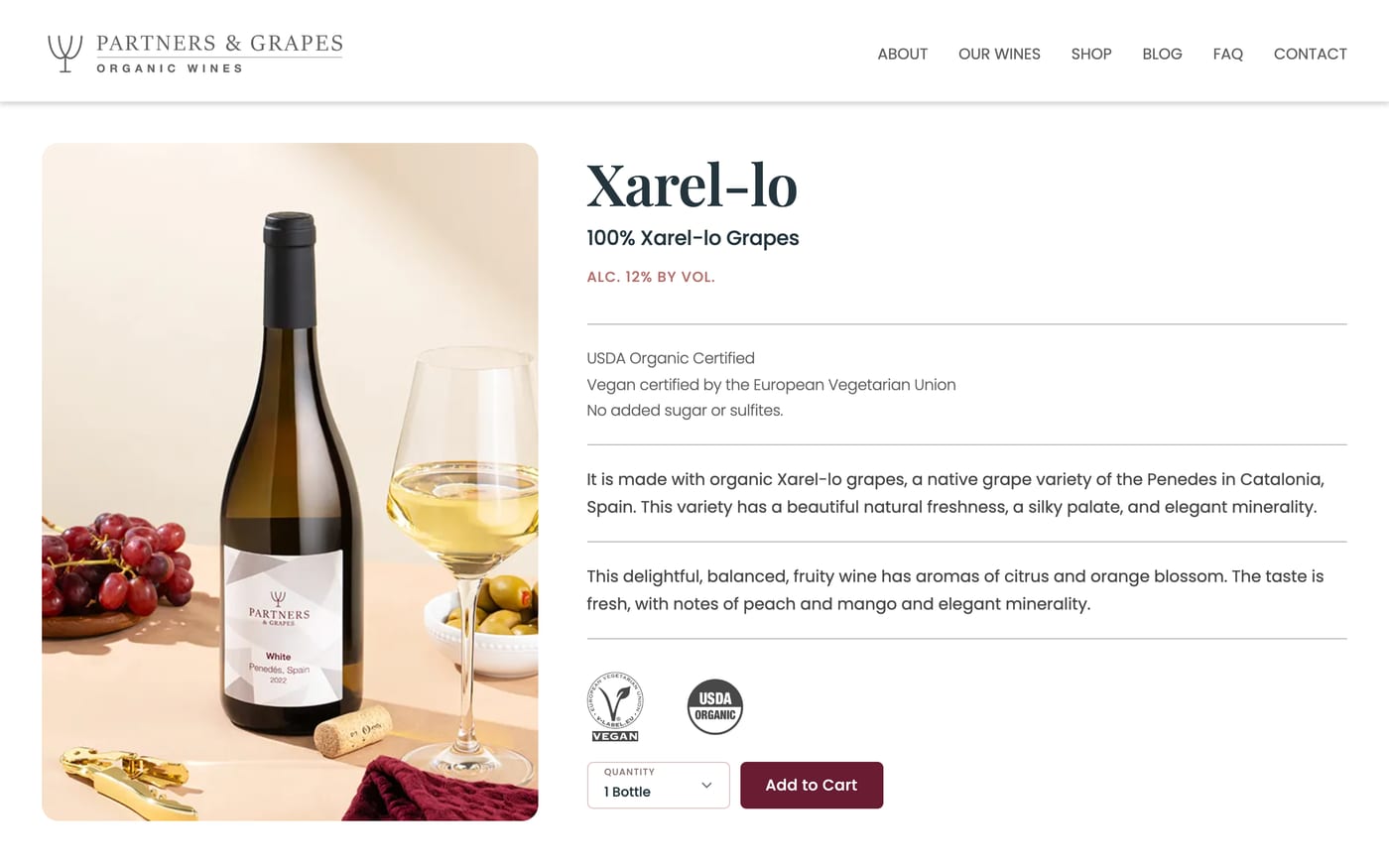
A page for every wine in the collection
Each of the seven wines has its own page, with what a buyer wants to know before choosing a bottle: the grapes, the vintage, the alcohol, the certifications, and tasting notes, plus a button to order the bottle from the shop.
Certifications
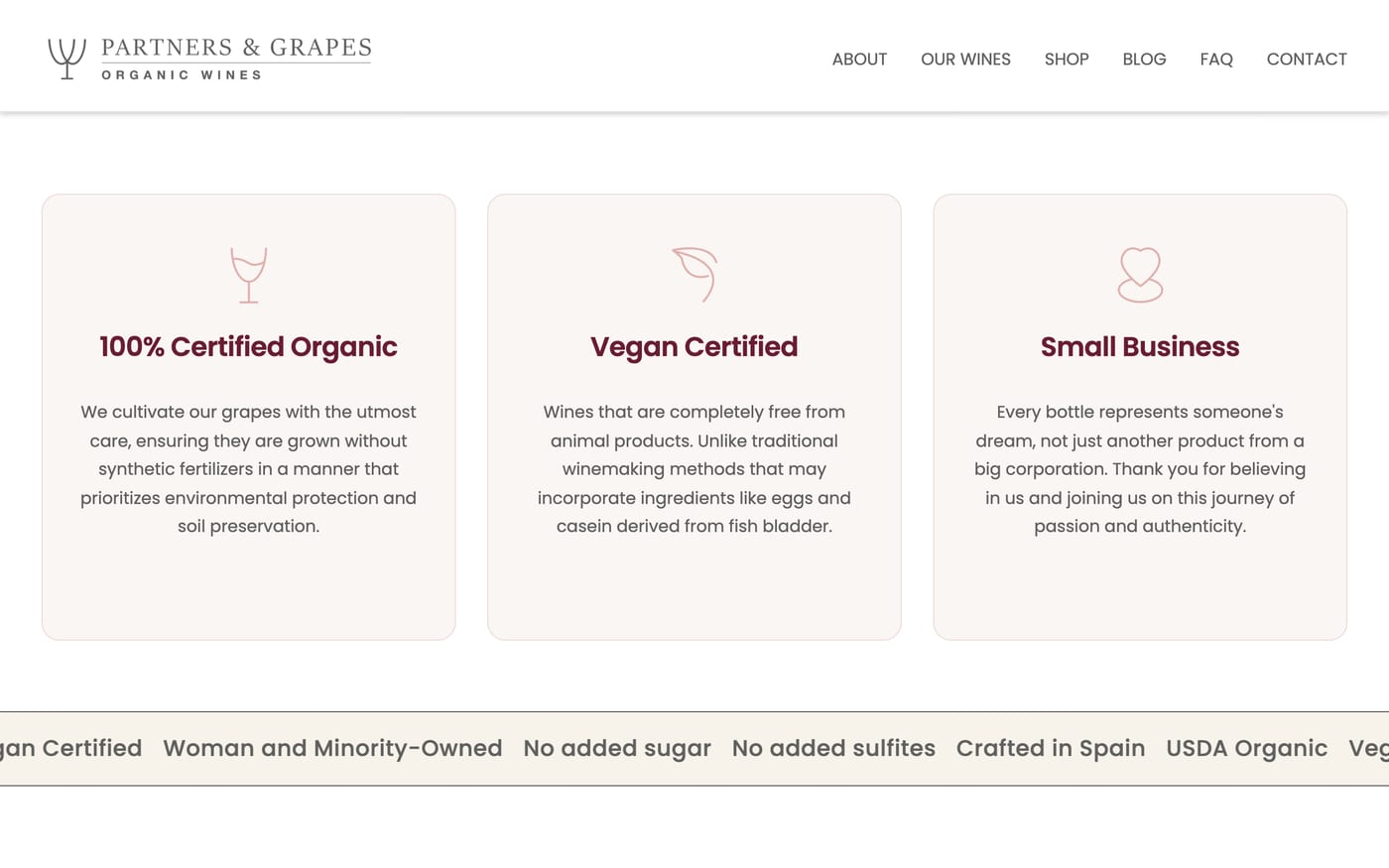
What makes the wine different, up front
The homepage leads with what sets these wines apart: USDA Organic and vegan certified, no added sugar or sulfites, woman and Latina owned. Further down, a moving strip of badges repeats it, so no visitor misses any of it.
Brand assets
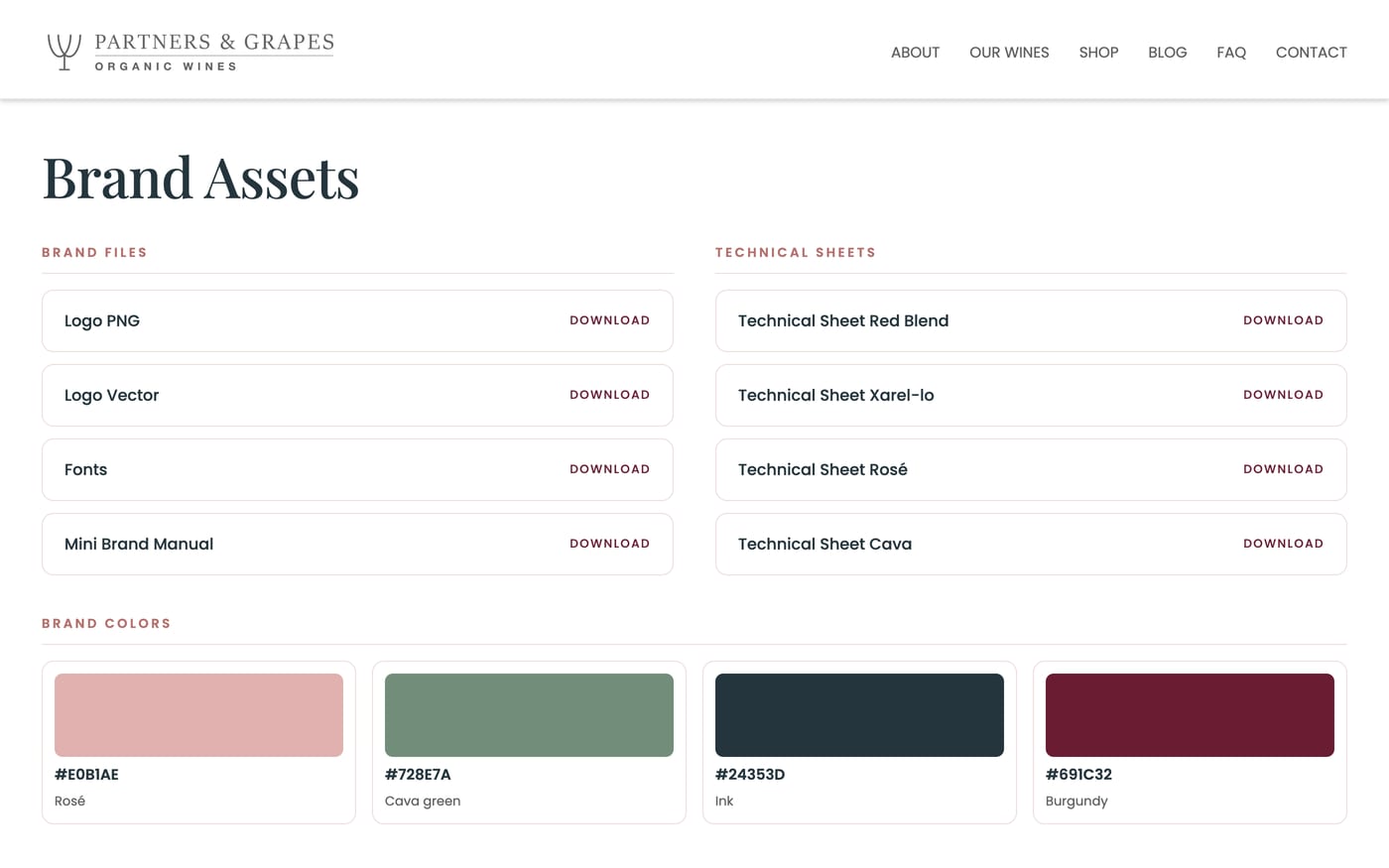
A brand kit for stores and press
A Brand assets page puts the official files one click away: the logo, the fonts, a mini brand manual, the colors, and technical sheets for the four core wines. Distributors, stores, and press download what they need without asking.
Blog and FAQ
Answers to what wine buyers search for
A blog with 14 posts and an FAQ page with 10 answers cover questions people ask about organic, vegan, and sugar-free wine. Each post is one more page that can be found in search, on the topics the brand wants to be known for.
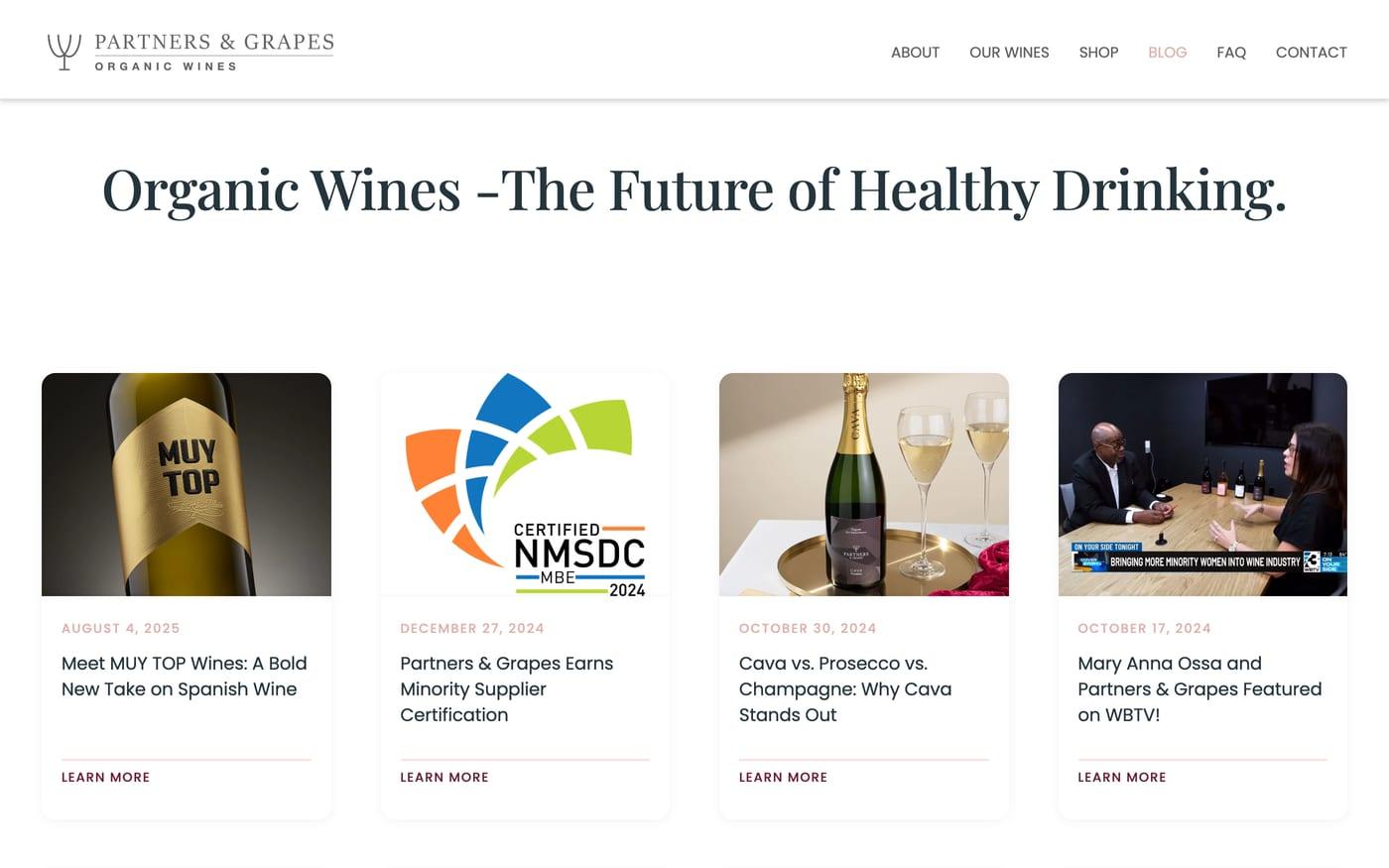
Built for phones too
The homepage, the collection, each wine page, and the brand kit all work on a small screen, with the bottles still front and center.
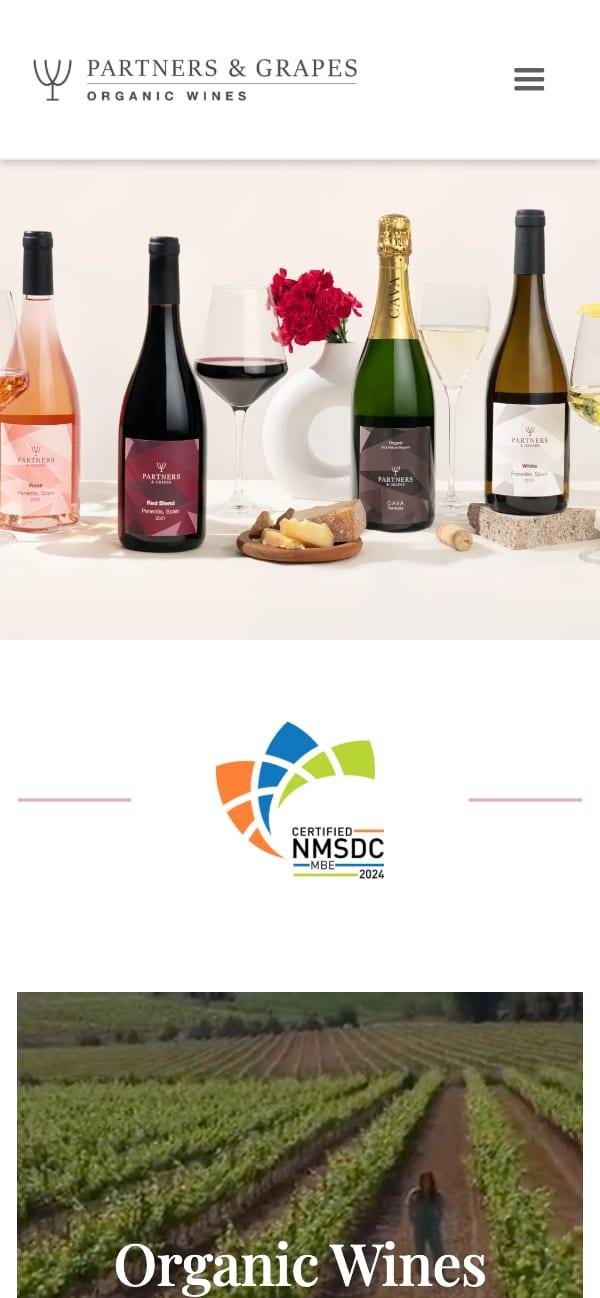
Home 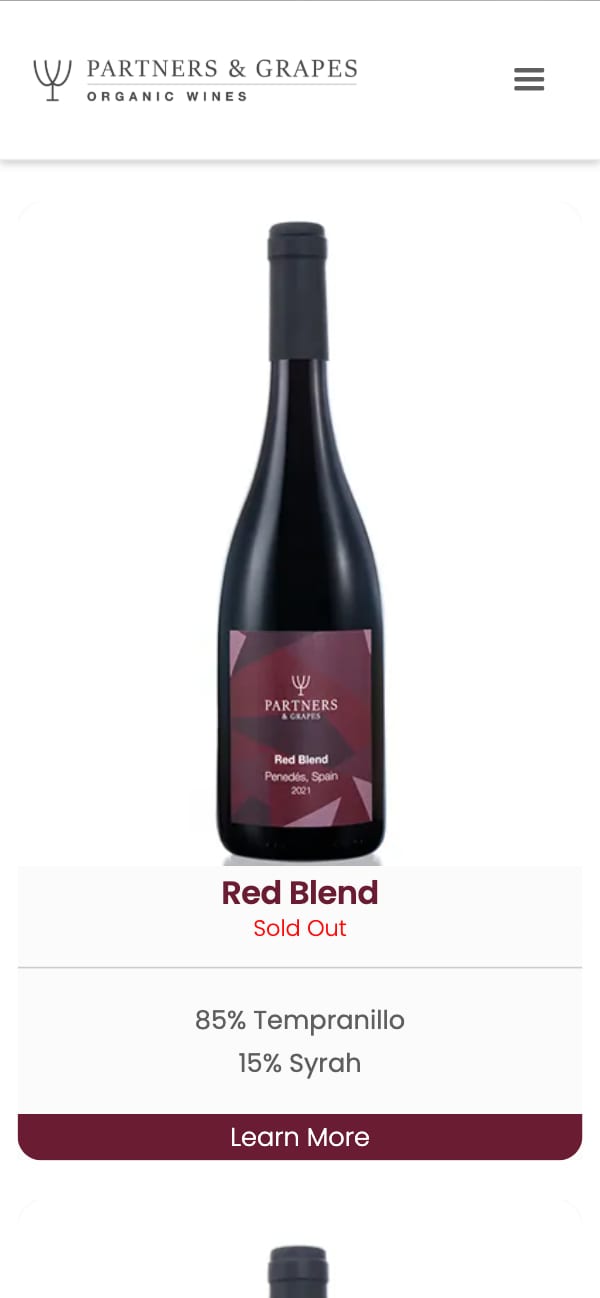
Our wines 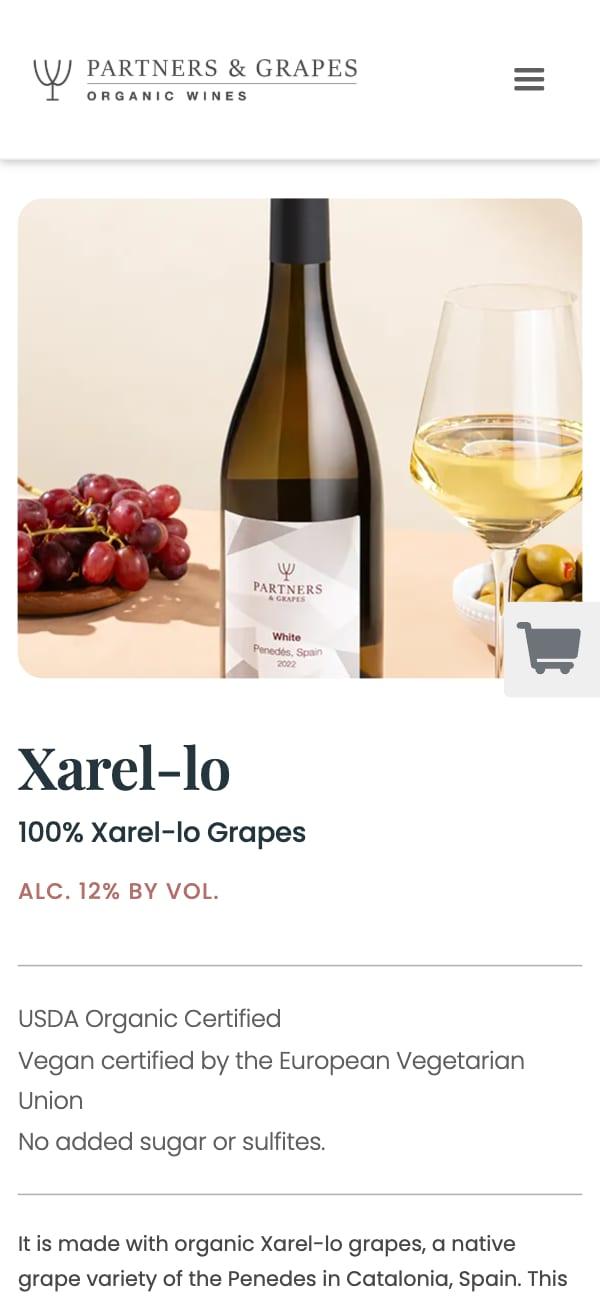
Wine page 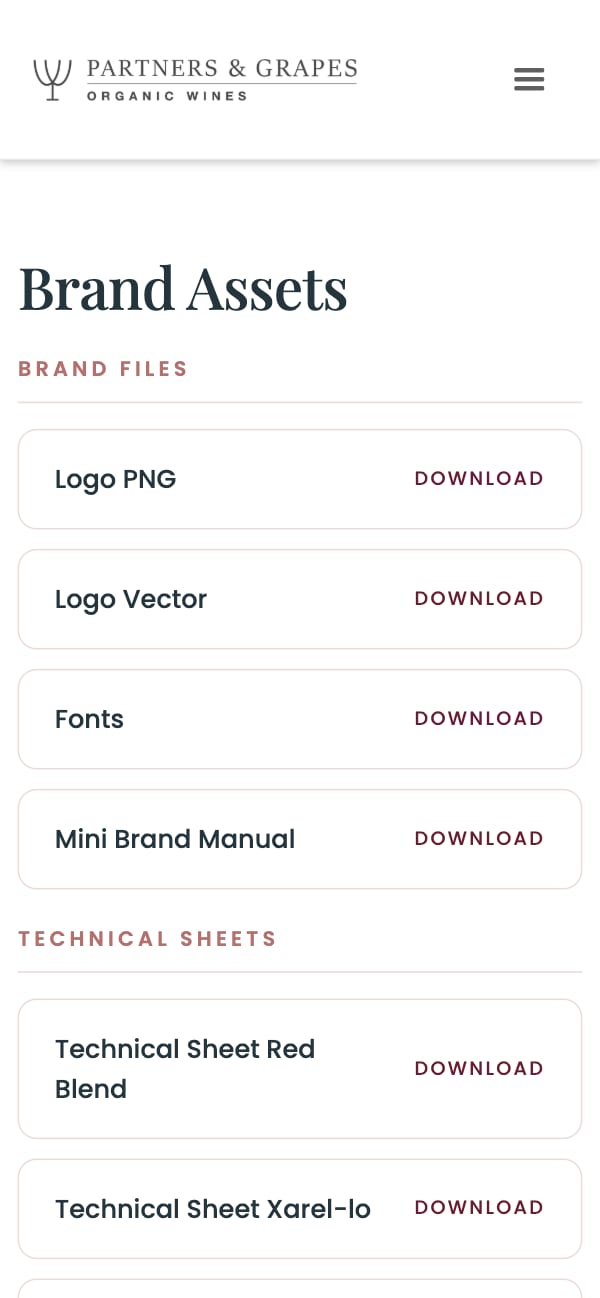
Brand assets
Under the hood
An age check at the door
Visitors confirm they are 21 or older before they enter the site.
Structured data on every page
Every page checked describes the brand and the page itself (a product, a collection, the FAQ, the contact page), plus breadcrumbs.
A cookie choice before tracking
Advertising analytics, the Meta Pixel, runs only if the visitor accepts the cookie banner.
The brand work
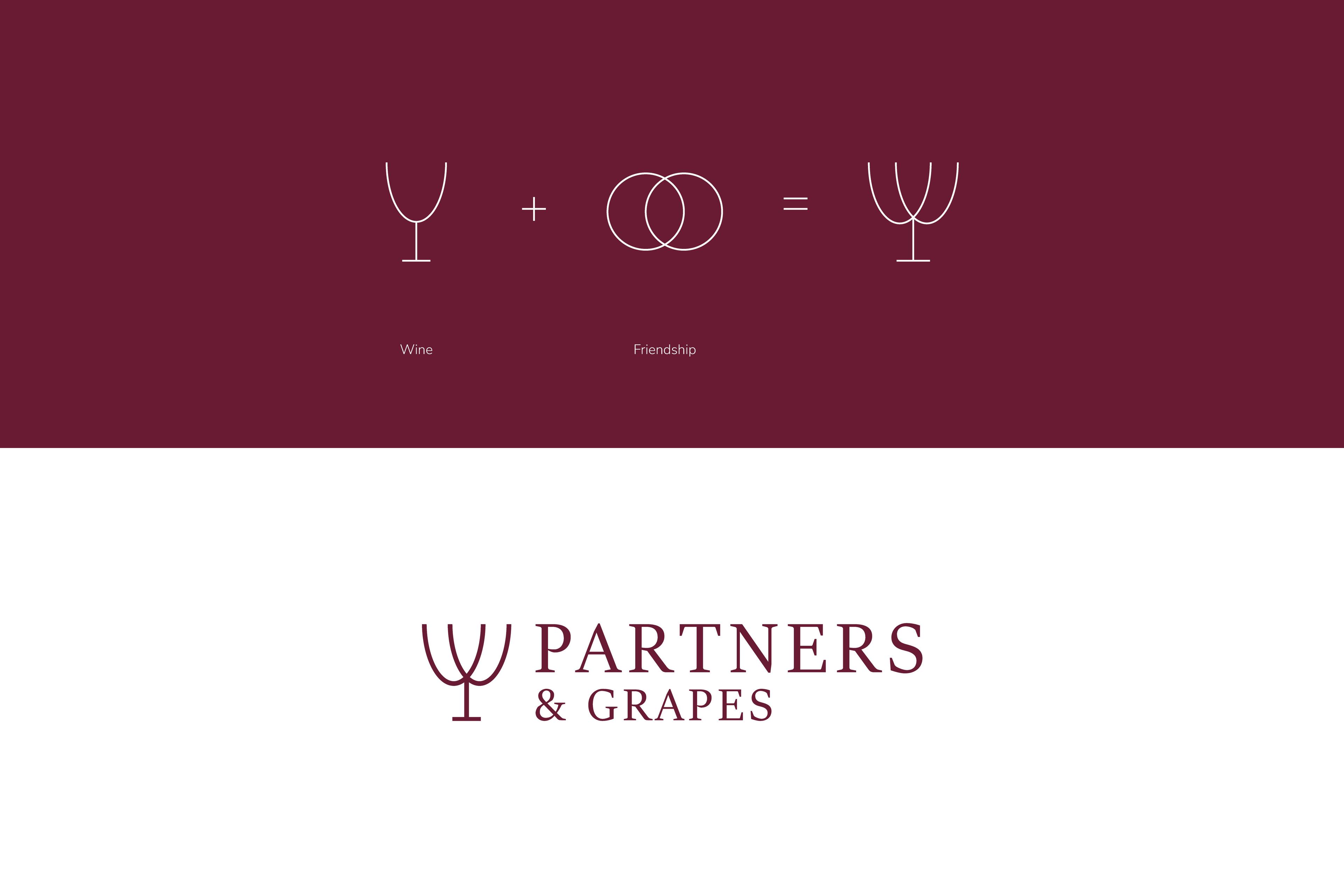
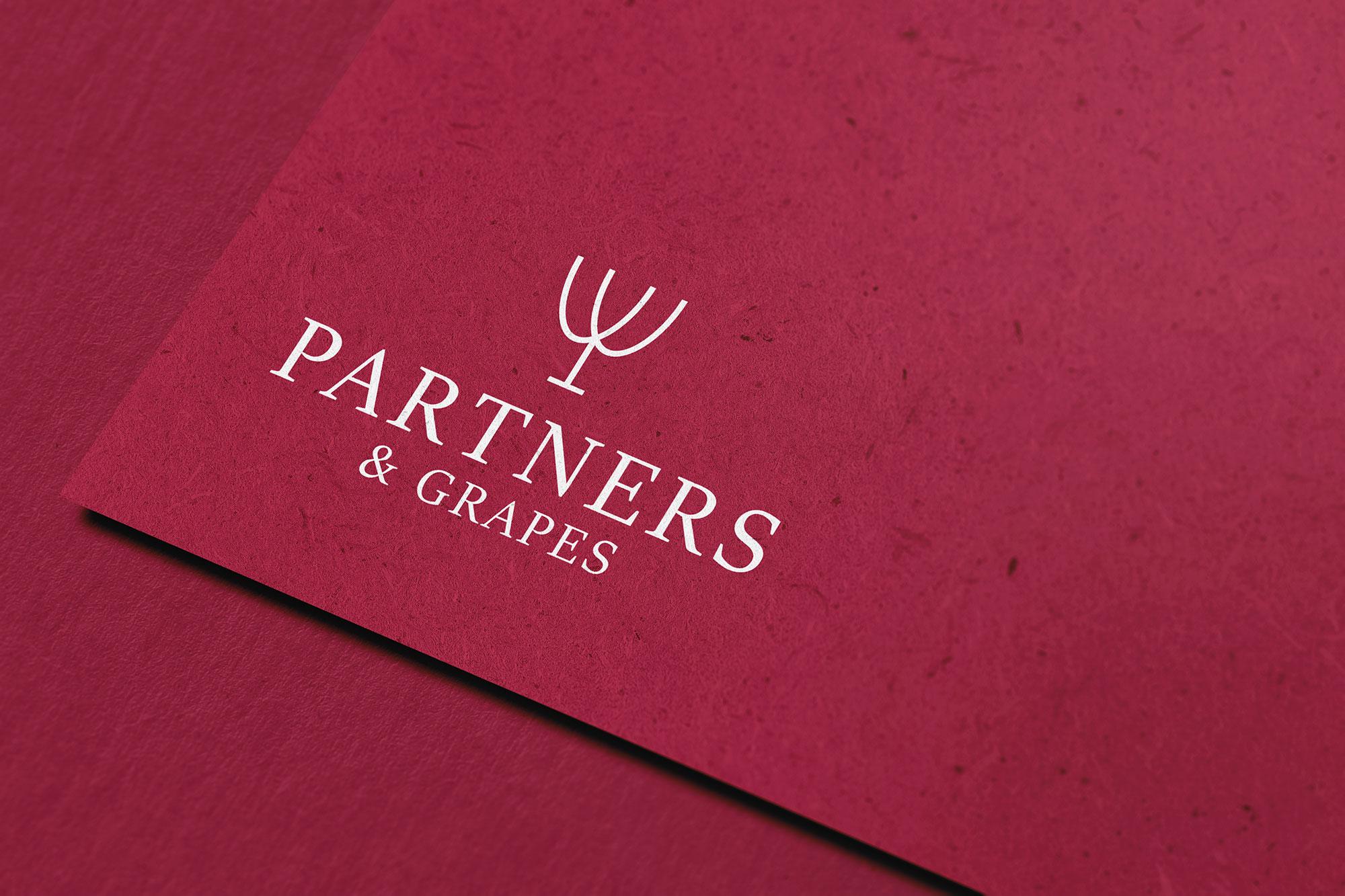
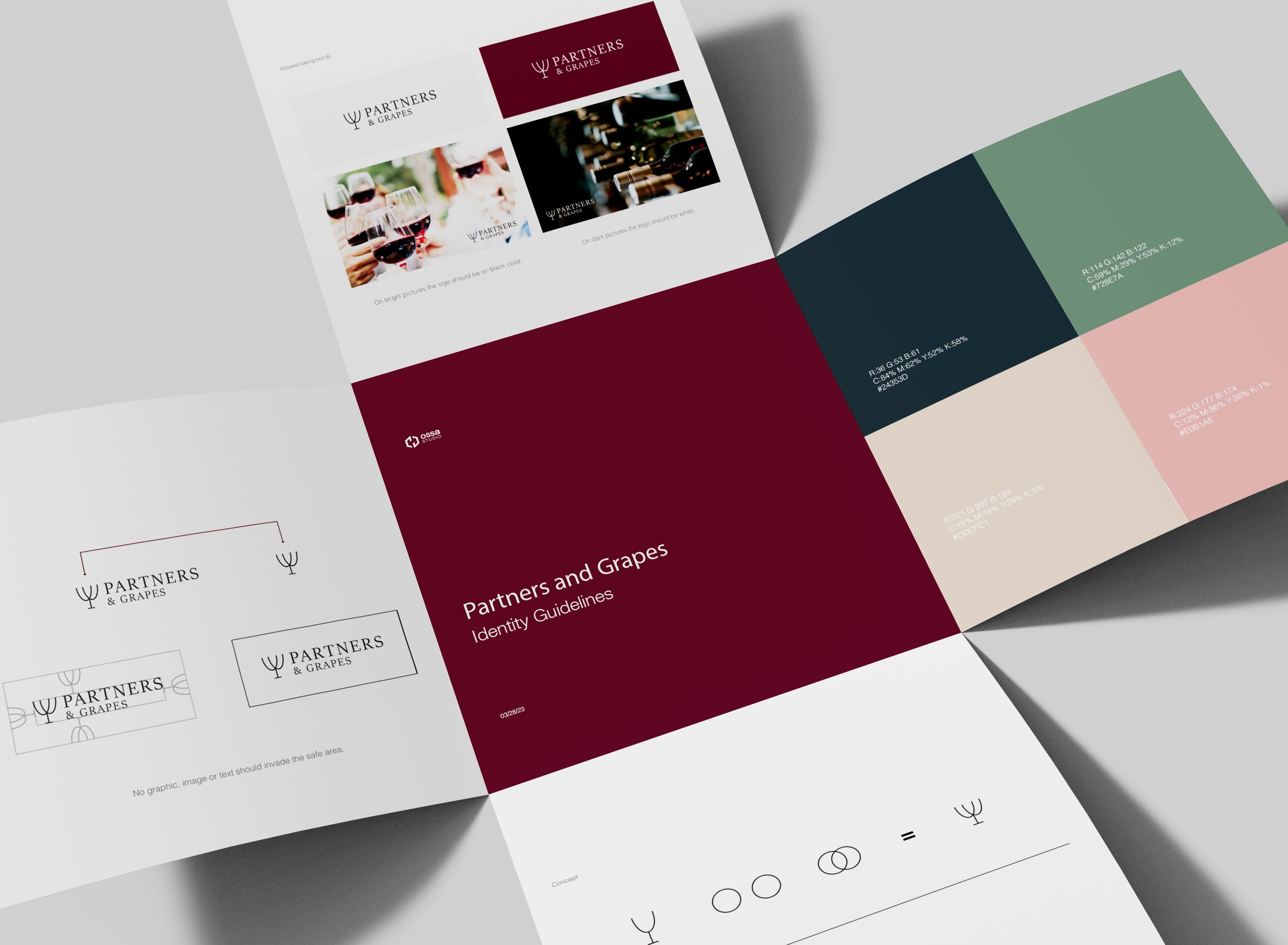
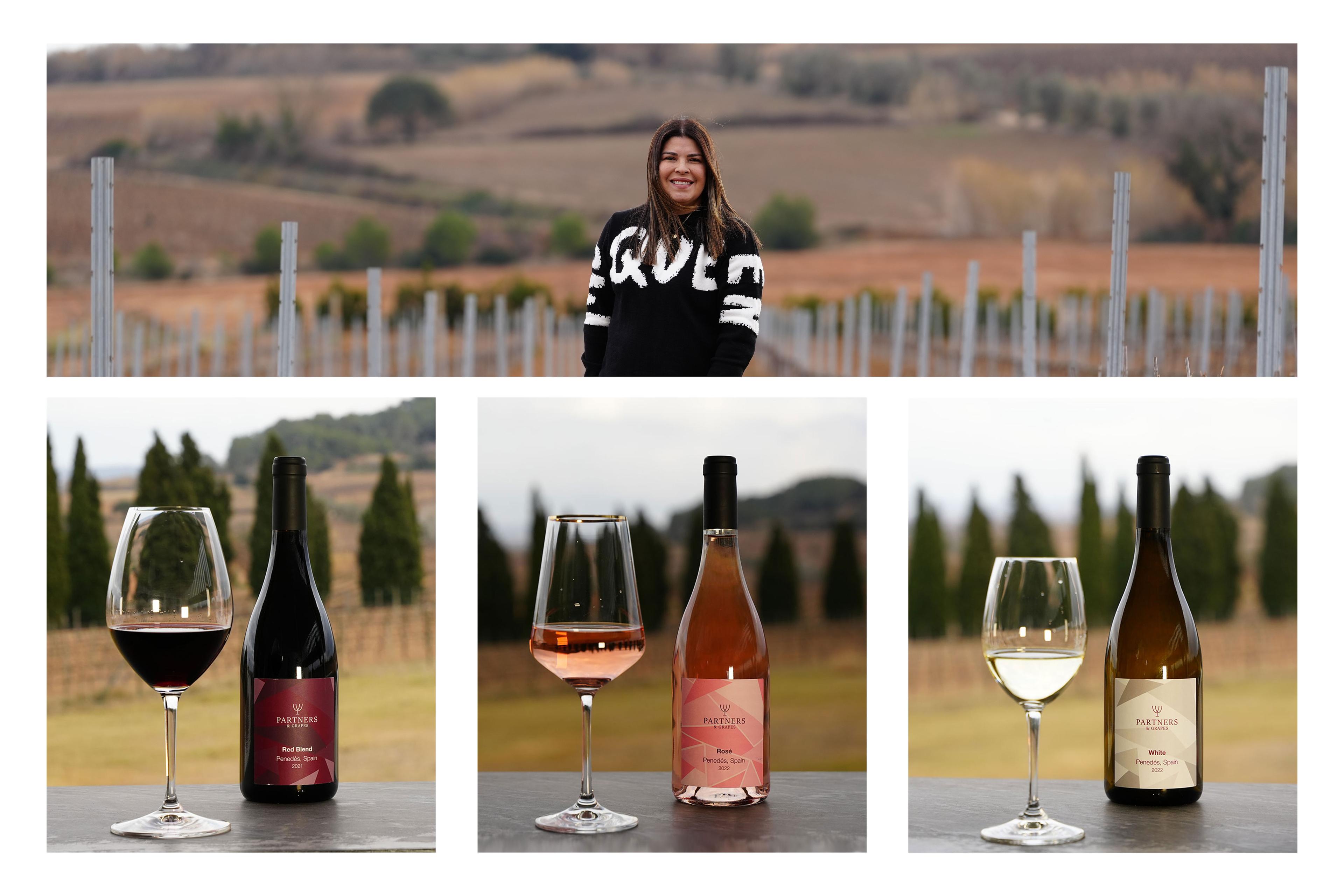
Brand and website, designed together
Because the brand and the website were designed together, the site carries the same personality as the labels on the bottle: a cohesive identity from the first visit to the first pour.
What a wine brand website needs in the U.S.
Partners and Grapes sells in the Carolinas and Georgia, and the same playbook works for any wine brand, importer, or winery in the U.S. If I were designing your wine website, this is what I'd make sure it has.
- 01
A page for every wine
Grapes, vintage, alcohol, tasting notes, pairings, and a clear next step: buy it online or find it in a store. Each page can also show up when someone searches for that wine by name.
- 02
Your story, and what makes the wine different
Who makes it, where it comes from, and how it's made. Put certifications like organic, vegan, or sustainable where buyers see them first.
- 03
An age check
Many wine sites, Partners and Grapes included, ask visitors to confirm they're 21 or older before showing the site.
- 04
The statements federal rules require
TTB's advertising rules apply to websites too. If you produce, import, or wholesale wine, the site has to show the responsible advertiser's name with its city and state or other contact information, and each wine's class or type (27 CFR 4.62). A good wine site puts them in the footer and on every wine page. This isn't legal advice, so confirm with TTB what applies to you.
- 05
A clear way to buy
If you sell direct, use a platform made for wine, such as Vinoshipper, Commerce7, or WineDirect, because shipping rules change from state to state. For everyone else, list the stores and restaurants that carry your wine.
- 06
A kit for stores, distributors, and press
Logos, bottle photos, fonts, and a technical sheet for each wine, ready to download.
- 07
Content that answers buyers' questions
An FAQ and a blog on what your buyers search for, such as organic, vegan, or low-sugar wine, with the answers in the page's HTML.
- 08
Fast pages on a phone
Aim for pages that load their main content in 2.5 seconds or less on mobile, which is Google's target for Largest Contentful Paint.
Wine website design FAQs
What should a winery website include?
A page for every wine, your story and certifications, a clear way to buy online or in a store, a kit for stores and press, answers to the questions buyers ask, and fast pages on mobile. U.S. wine producers, importers, and wholesalers also need the advertising statements TTB requires, like the responsible advertiser's name and contact information.
How much does a winery website cost?
It depends on how many wines and pages the site needs, which platforms it connects to, such as a shop, a wine club, or reservations, how much content needs writing, and whether we start from scratch or redesign your current site. I quote each project individually. Hosting and content updates are covered by a predictable monthly plan.
Can you build my online store or wine club?
No. I don't build online stores or wine-club checkouts. Most wine brands sell online through a platform made for wine, such as Vinoshipper, Commerce7, or WineDirect, and the website links to it.
Do you work with wine brands in the U.S.?
Yes. I've worked with U.S. businesses for more than 10 years, remotely from Bogotá, Colombia, and my working hours overlap with U.S. business hours.
Selected work
Real projects, each one designed for its industry and the clients it wants to win.

Building a wine or beverage brand?
I design and build brand websites. I do not build online stores or wine-club checkouts. Tell me about your brand and I'll reply with what I can do for you.